Fstoppers
Photography News and Community for Creative Professionals
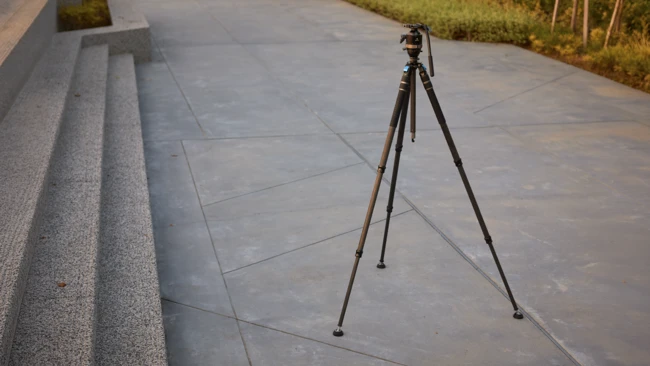
As someone who relies heavily on a geared head for precise hospitality work, the increasing demand for speed and video applications has left me considering how to integrate a hybrid ball head system into my professional workflow. Specifically, I was looking for a unit that acts as a traditional fluid head, yet retains the multi-axis freedom of a ball head for dynamic still photography—all without lugging around two different support systems.
Most advice on personal projects follows the same order: settle on a concept, write a rationale, set some rules, and only then pick up the camera. That sequence keeps a body of work coherent, though it can also screen out the images you keep returning to before you have any idea why they pull at you.
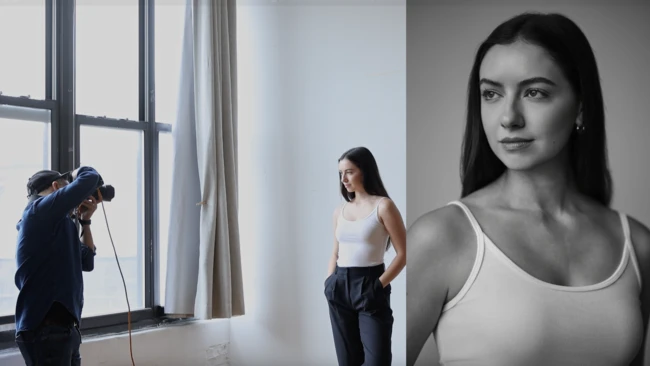
Crafting beautiful portraits with a simple camera and lighting setup is possible, and limiting our gear choices can lead to even more creative results.
In my latest YouTube video, I demonstrate how I use natural light, strobe, and continuous light to create portraits. Instead of focusing on a ton of gear, I use simple setups, starting with just a window, and then show how I can use one Westcott FJ100 M hot shoe flash and a Joel Grimes Beauty Dish, and later one Westcott L120-B continuous light with the same modifier, to create varied results.
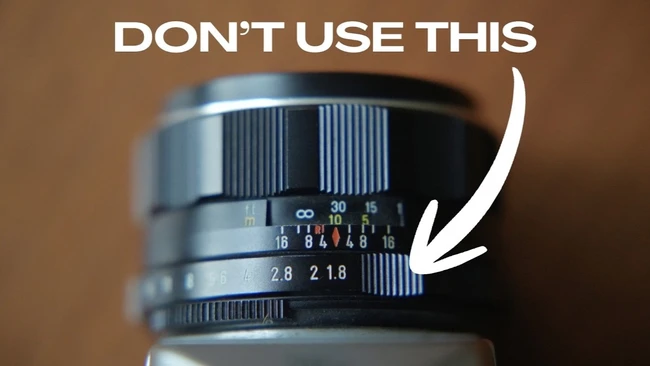
Background blur is usually the first effect you learn to create on purpose, and that early success tends to shape how you shoot for years. The settings you lean on, from aperture to shutter speed to exposure mode, decide whether your images feel flat or deep long before you open an editor.
Samyang's three f/2.8 zooms, co-designed with Schneider-Kreuznach, cover 14mm to 180mm on Sony full frame bodies while stepping away from the familiar 16-35mm, 24-70mm, and 70-200mm ranges. Trimming a few millimeters here and adding a few there is how a lens maker cuts size, weight, and price, and those are the things that decide whether a lens leaves your house or stays on the shelf.
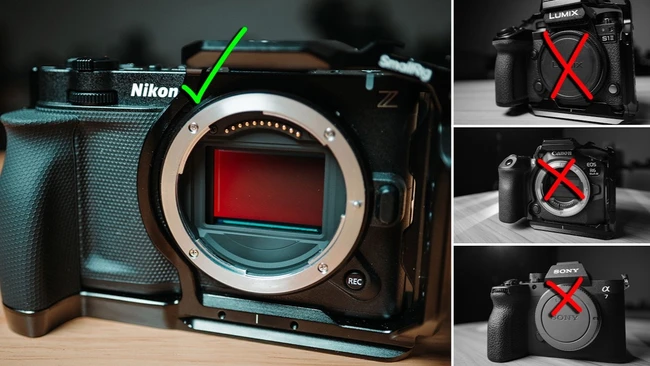
Nikon now owns RED, and the first camera to come out of that deal is the Nikon ZR, a compact body that records RED's raw codec for a little over $2,000. If you shoot video for clients or your own films, that pairing puts a codec once tied to cinema camera budgets inside a body small enough to balance on a basic gimbal.