August 04, 2014
Pentax Q-S1 Digital Camera: Providing endless artistic expression in a fashionable compact design, complete with interchangeable lenses.
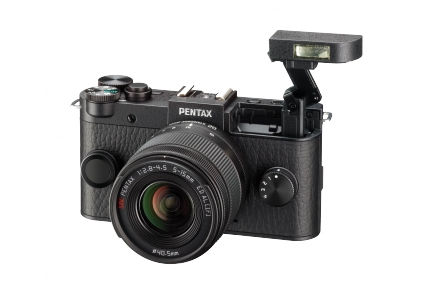
PENTAX Q-S1 DIGITAL CAMERA
Denver, Colorado August 4, 2014 RICOH IMAGING AMERICAS CORPORATION is proud to introduce the new PENTAX Q-S1, one of the world’s smallest and lightest digital cameras with interchangeable lenses. With a new refined look, Smart Affect mode for creative photo enhancing, and color variations from today’s hottest fashion trends, the Q-S1 is an ideal everyday camera for the style-minded looking for the portability of a compact and added benefits of interchangeable lenses.
“Along with its stylish, petite body, this new model offers impressive specifications. The PENTAX Q-S1 is an ideal everyday camera for photographers of all levels, complete with an entire system of 8 lenses designed for on-the-go fun” said Jim Malcolm, Executive Vice President of RICOH IMAGING Americas, Corp.
The PENTAX Q-S1 is the latest addition to the popular PENTAX Q series of compact-sized, interchangeable-lens digital cameras. The camera is equipped with a wide range of features to make photography more enjoyable, including a 12.4 megapixel, back-illuminated CMOS image sensor to deliver high-quality images, high-sensitivity shooting to a top sensitivity of ISO 12800, and a reliable shake-reduction system using a state-of-the-art gyro sensor. It also provides a variety of creative tools, such as bokeh control and Smart Effect to add the desired filters with just a simple turn of a dial. The PENTAX Q-S1 creates more personalized, creative images easily and beautifully.
In addition, RICOH IMAGING is pleased to announce the launch of a color to order® service for the new PENTAX Q-S1 digital camera. This unprecedented service, (originally launched with the Q7 in July 2013), has been popularly accepted by many users as a new, fashionable way of expressing one’s personal taste and style.
There are 4 standard color combinations and additional 36 body and grip colors taken straight from the runway, such as champagne, khaki green, and charcoal black, and can be ordered through the color to order® service. The PENTAX-01 STANDARD PRIME lens color can also be chosen from five different options to make the entire imaging system even more desirable and eye-catching.
Pricing and Availability
The Q-S1 will be available at retailers nationwide and at www.us.ricoh-imaging.com in August 2014 for a suggested retail price of $499.95
Ordering for the custom colors will be available in August 2014
To learn more about the comprehensive lineup of Pentax products as well as other RICOH IMAGING products, please visit www.us.ricoh-imaging.com
About RICOH IMAGING Americas Corporation|
RICOH IMAGING Americas Corporation is a subsidiary of Ricoh Company Ltd., a global technology company specializing in office imaging equipment, production print solutions, document management systems and IT services. Headquartered in Tokyo, Ricoh Group operates in about 200 countries and regions.
The company now known as RICOH IMAGING Americas Corporation was originally founded in 1919, under the name Asahi Optical Joint Stock Co. and launched its first SLR camera in the 1950s under the PENTAX name. Today, RICOH IMAGING Americas Corporation continues to produce the heritage-rich, award-winning line of PENTAX DSLR cameras, lenses and sport optics equipment as well as Ricoh’s offering of stylish and compact digital cameras, known for their wide-ranging, rich set of features.
For further information, please visit www.us.ricoh-imaging.com
###
© 2014 RICOH IMAGING Americas Corporation. All rights reserved. All referenced product names are the trademarks of their respective companies.
Contact:
Sarah Schachterle
Public Relations Manager
(303) 728-0320
Sarah.schachterle@us.ricoh-imaging.com
RICOH IMAGING AMERICAS CORPORATION www.us.ricoh-imaging.com
633 17th Street I Suite 2600 I Denver, CO 80202 I Phone: 303-799-8000
Main Features
1. Classic, high-grade design
The Q-S1 sports a classic design, with meticulous attention paid even to the texture of the finest details, making it a perfect everyday camera to carry around under all kinds of situations. Its Quick Dial and grip are made of high-grade aluminum for an exclusive look, and are symmetrically positioned for holding comfort and visual attractiveness. For the first time in the Q series, synthetic leather has been used for the front panel, to improve the texture and appearance.
2.12.4 Megapixel image sensor to deliver high-quality images
Due to its 12.4 megapixel, back-illuminated CMOS image sensor, the Q-S1 delivers high-quality and high-resolution images. Coupled with the state-of-the-art high-speed engine name “Q ENGINE”, it also minimizes annoying noises effectively at all ISO sensitivity levels to deliver rich-gradation, fine-texture images, even in high-sensitivity shooting using a top sensitivity of ISO 12800. It also offers outstanding autofocus accuracy during low-illumination shooting, since it assures pinpoint focus on the subject even at the faintest light level of EV 0.
3. Outstanding operability
Thanks to the incorporation of the Q ENGINE with an optimized algorithm, the Q-S1 assures quick, flawless response at all phases of shooting operation, including a short start-up time of approximately one second. The Quick Dial also lets the user assign as many as four favorite functions, including Smart Effect, aspect ratio, AF/MF switching, focus assist ON/OFF and ND filter ON/OFF, for instant mode switching during shooting.
4. Dependable SR mechanism
The Q-S1’s advanced SR (Shake Reduction) mechanism features a state-of-the-art gyro sensor to effectively compensate for annoying camera shake. It produces sharp, blur-free images even under shooting conditions prone to camera shake, such as when using a telephoto lens, shooting in the dark without flash illumination, or capturing landscapes in the twilight.
5. Full HD movie recording, even during high-sensitivity shooting
The Q-S1 captures beautiful Full HD movie clips (1920 x 1080 pixels, at 30 frames per second, in the H.264 recording format) with minimal noise. It also provides an interval HD movie recording function to add more creativity to visual expression. The user can also take advantage of advanced image-processing tools like the Smart Effect modes* and an array of in-body movie editing tools. The Continuous AF (AF-C) mode** has been newly added to these creative options, allowing the user to capture a moving subject in sharp focus during movie recording.
* The frame rate may vary when a selected Smart Effect mode requires nonstandard image processing.
** This mode is not compatible with the UNIQUE LENS-series lenses and the 06 TELEPHOTO ZOOM lens.
6. Large, high-resolution 3.0-inch LCD monitor
The Q-S1 features a high-resolution 3.0-inch 3:2-proportion LCD monitor with approximately 460,000 dots. This monitor is treated with AR (Anti-Reflection) coating to produce sharp, bright images even under bright sunshine by effectively minimizing glare and reflection on the screen. Since its wide-view design makes it possible to view the image from 170 degrees horizontally and vertically, the user has a clear view of the on-screen image even when facing the monitor from an angle.
7. An array of image-processing tools to create personalized images
(1) Custom Image function to add distinctive finishing touches
The Custom Image function adds a distinctive finishing touch to an image, faithfully expressing the photographer’s creative intention or reproducing the ambience of a specific scene. The user has a choice of 11 Custom Image modes, including Bleach Bypass, which produces a dramatic, movie-like finish.
(2) Digital filter function to apply artistic visual effects
The digital filter function lets the photographer apply a variety of visual effects without requiring a computer. Of 17 total options, 11 filters including Toy Camera, Invert Color and Posterization can be applied even during the shooting of still images and movie clips, while the remaining six can be applied only during image editing. The user can even apply multiple filters to a single image to produce more inventive visual effects.
(3) Smart Effect function for simple dial control of finishing touches
Using the Quick Dial positioned on the camera’s front panel, the user can quickly and effortlessly add a desired finishing touch to an image, while previewing the applied effect on the LCD monitor. From nine Smart Effect modes — including Antique for a nostalgic atmosphere and Fade Color for a chic, faded-color finish — the user can assign four favorite modes to the dial in advance.
8. Effortless bokeh control
The Q-S1’s unique bokeh control function allows the user to make the subject stand out by automatically assessing the relative distance between the in-focus subject and obtrusive objects in the field of view. Since this function simplifies the advanced, SLR-caliber technique of intentional defocusing, even a first-time digital camera user can effortlessly capture high-quality images with beautifully defocused foregrounds and backgrounds.
9. Simple, user-friendly Auto Picture and Scene modes
The Q-S1 features the PENTAX-original Auto Picture mode, which automatically selects the most appropriate shooting mode from an range of options including Portrait, Landscape and Macro for a given scene or subject. Since the camera optimizes all affecting parameters, such as shutter speed, aperture, white balance, saturation, contrast and sharpness, the user can concentrate on the image composition and shutter opportunity. The Q-S1 also provides 21 Scene modes including Night Scene Portrait, Pet and Backlight Silhouette, allowing even an entry-level digital photographer to choose the best exposure settings for a complicated scene or subject with the simple choice of an icon on the LCD monitor.
10. Digital SLR-caliber exposure system
The Q-S1’s comprehensive exposure system assures all the advantages and flexibility of a lens-interchangeable digital camera system. In addition to the all-purpose Programmed AE (P) mode, which automatically selects an optimum combination of aperture and shutter speed, it also provides the Aperture-Priority AE (Av) and Shutter-Priority AE (TV) modes for manual setting of a desired aperture or shutter speed, as well as Metered Manual (M) mode for complete user control over exposure settings.
11. DRII mechanism for effective dust removal
The Q-S1’s DRII (Dust Removal II) mechanism effectively prevents annoying dust spots from spoiling captured images, even after the user changes lenses out in the open. Like the PENTAX K-3 and 645Z digital SLR cameras, it employs a highly efficient supersonic vibration mechanism, which vibrates the image sensor at high speed to shake dust off its surface.
12. Other features
・Compatibility with Eye-Fi wireless LAN SD memory cards
・High-speed continuous shooting of up to five images per second
・HDR mode to composite three images of varying exposures into one photo with extra-wide dynamic range
・CTE white-balance control mode to emphasize the predominant color of a particular scene, such as the sunset
・Multi-exposure mode (up to nine exposures on a single image), with an auto exposure compensation function
・Remote control receptors on front and back panels
・Digital level function to check the camera’s horizontal/vertical inclination
・Digital Camera Utility 5 software (latest version) included
Optional Accessories
O-CC151 Camera Case
A camera case exclusively designed for the Q-S1, with two strap lugs at the sides to keep the camera suspended at a level position for delay-free shooting. It not only protects the camera from dust and scratches, but adds a sense of elegance and style to the camera. Made of synthetic leather, with a choice of black, cream or gray color.
Usable model: PENTAX Q-S1
O-CC1512 Camera Case (with front cover)
A camera case exclusively designed for the Q-S1, with two strap lugs at the sides to keep the camera suspended at a level position for delay-free shooting. Comes with a front cover to protect the lens surface from dust and scratches. Made of synthetic leather, with a choice of black, cream or red color.
Usable model: PENTAX Q-S1
O-CC1513 Holster Case
A camera case designed to fasten on a belt for quick removal of the camera. The main holster holds the camera with a lens attached, while two neighboring compartments hold the 06 and 02 lenses, respectively. Made of brown-colored synthetic leather, with a ring to attach a strap. A hand strap is also included.
Usable model: PENTAX Q-S1, Q7, Q10 and Q
O-CC1516 Lens Case for 02/06
A lens case for exclusive use with the 02 or 06 lens, with internal padding to protect the lens from dust and scratches. Made of black-colored synthetic leather, with a ring to attach a strap.
Applicable models: PENTAX-02 STANDARD ZOOM and PENTAX-06 TELEPHOTO ZOOM
O-ST151 Three-way Strap
A versatile three-way camera strap, providing three different functions — diagonal suspension, neck strap or hand strap — by varying the arrangement of its two parts. Made of synthetic leather, with a choice of black or cream color.
Usable model: PENTAX Q-S1, Q7, Q10 and Q
Note: Designs and specifications are subject to change without notice.