New Samsung makes light of weighty problem

By: Charles Wright. May 7th 2014. (http://www.brisbanetimes.com.au)

It’s been more than a decade since we last invested in a camera – a Canon EOS 10D DSLR (digital single lens reflex). Until we spent a couple of days in Hobart among a group of journalists evaluating Samsung’s new NX30 last month, we had no idea what we’d been missing out on.

Fitted with its 18-75mm L Series lens – a beautiful piece of glass – the Canon 10D weighs just over 2.2kg. Carry that around your neck every day for a couple of weeks, as we did during one trip to Paris, and you begin to wonder whether you really do want to keep a photographic record of your travels.

As it happens, that’s precisely what happened to us. After Paris, we rarely took the 10D out of its bag.

The NX30 has introduced us to a much more bearable lightness of being and, happily, that has rekindled our interest in photography.

Full article at the source>

Why Buy a Digital Camera When You Can Rent?

By: Lauren Goode. April 21, 2014 (http://recode.net)

It’s a well-reported trend: The digital camera market is getting hit hard by smartphones.

And yet, after looking at another set of dim, noisy smartphone photos from a wedding reception last weekend, I can’t help but think there are still situations in which a digital camera — or at the least, a more powerful sensor — is a good thing.

It’s those scenarios that Lumoid wants to capitalize on. Lumoid is a new camera-rental company that’s targeting wedding-goers, new parents, vacationers and photo hobbyists. Its prices range from $5 to $25 per day per item, except for accessories, which are listed for purchase.

Full article at the source>

Canon EOS Digital Camera Systems DSLR

Canon LogoThe Canon EOS Camera System is the most complete Single Lens Reflex (DSLR) camera system in the world. Whether you are a beginner or advanced professional looking for a digital camera, the EOS System takes your photography to the next level.

Amazing image quality and outstanding performance are just two of the many benefits photographers, from beginners to professionals, will experience with every interaction with a Canon EOS digital camera.

Here’s a table with the most popular DSLR Cameras from this leading manufacturer


Renowned photographer Royce Bair to host nightscape star shooting seminar

03-29-2014 (http://www.suindependent.com/)

Photographers with DSLR cameras can become proficient in shooting the night sky more easily and quickly than they might think.

Because of the recent advanced technology of our digital cameras, professional photographers or enthusiastic amateurs can now capture the Milky Way and the constellations, which are usually barely visible to the naked eye. Making the image even more interesting is the addition of foreground features to place the sky in context, and photographers can learn to do this with light painting. All this is available through the DSLR’s low-light sensitivity. Photographers just need to become familiar with using and adjusting the camera’s manual features such as aperture, shutter speed, ISO and white balance, and have the correct wide angle lens.

Click Photography Club of St. George will host a technical seminar on the art of star shooting, which will be presented by Royce Bair of Nightscape Meetup. The seminar will take place on Thursday, April 10 from 8-10:30 p.m. and is open to both Click members and nonmembers. Pre-event discounts are offered at http://BIT.LY/PTX4V7.

Full article at the source>

Canon celebrates production of 250 million digital cameras

TOKYO, Japan, March 27, 2014—Canon Inc. today celebrated a camera-manufacturing milestone as combined production of the Company’s compact digital and interchangeable-lens digital cameras surpassed 250 million units on January 31, 2014

Canon EOS 70D Digital Camera

The EOS 70D, featuring
innovative autofocus technology
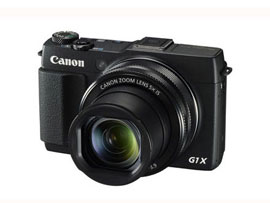
Canon Powershot G1 X Mark II Digital Camera

The PowerShot G1 X Mark II,
targeting the highest levels
of imaging performance

Canon, a company that has continuously produced cameras since its founding in 1937, began producing and marketing digital cameras in the mid 1990s. In 1995, when film cameras were still the norm, Canon launched its first digital camera, the professional-model EOS DCS 3* digital SLR camera.

At the time, compact cameras were leading the digital shift within the camera industry. In 1996, Canon announced its market entry with the introduction of the PowerShot 600, the Company’s first compact digital camera. In 2000, amid the market’s rapid growth, Canon launched the IXY DIGITAL (PowerShot S100 or DIGITAL IXUS in markets outside of Japan), featuring a ground-breaking compact, stylish body design that set the trend for compact digital cameras.

Subsequent models released by the Company reflected the diverse evolution of compact digital cameras with models becoming increasingly compact and lightweight, achieving higher sensitivity, incorporating more enhanced automatic functions, and realizing greater network connectivity. This evolution fueled robust growth as Canon’s cumulative production of compact digital cameras surpassed the 100-million-unit mark in 2008, and broke through the 200-million-unit threshold in December 2013. Aiming to further extend its production volume, in 2014 Canon launched a new lineup of compact digital cameras that let users enjoy high value-added photography, including the PowerShot G1 X Mark II, designed to deliver the highest levels of imaging performance, and the new-concept-model PowerShot N100.

As for interchangeable-lens digital cameras, while the market in the mid 1990s had consisted primarily of professional models, with the start of the 2000s, the segment rapidly took off. In 2000, Canon launched the EOS D30, developed as a “next-generation standard digital SLR camera” to satisfy the needs of a wide user base, from advanced photo enthusiasts to professional users. In 2003, Canon again led the market with the introduction of the entry-level-model EOS Kiss Digital (EOS Digital Rebel or EOS 300D), which set the stage for dramatic expansion of the market.

Since that time, Canon has successively launched innovative products that capitalize on the Company’s strengths in CMOS sensors, image processors and EF lenses, such as the professional-model EOS-1 series and EOS 5D series targeting advanced-amateur users, as well as the compact-camera-system EOS M series. As a result, in 2005, production of Canon interchangeable-lens digital cameras reached 25 million units and, in February 2014, surpassed 50 million units. Among the new products worthy of note that contributed to the realization of this milestone were the EOS 70D, featuring innovative Dual Pixel CMOS AF autofocus technology, and the entry-level EOS Kiss X7 (EOS Rebel SL1 or EOS 100D), which combines a ground-breaking compact, lightweight body design with advanced basic performance.

Canon will continue to refine its diverse imaging technologies based on its core optical technologies, striving to produce exceptional and reliable cameras and lenses that cater to the varying needs of photographers—from first-time users to advanced amateurs and professionals—while contributing to expanding the culture of photographic and video imaging.

* The EOS DCS 3, jointly developed by Canon and Eastman Kodak, was also sold under the Kodak brand.
 

Buying a camera: everything you need to know

By: By David Pierce and Vlad Savov (www.theverge.com)

Cameras are everywhere. There’s one in your laptop, two in your phone, and probably a pair in your tablet that you’ve never used. There’s maybe one in your doorbell, even, or strapped to your head while you bomb the slopes. We’re taking more pictures in more ways and sharing them in more places than ever. Yet most of us use our cameras with the bare minimum of knowledge, just pointing and shooting and hoping for an Instagrammable moment. And even if you’re buying a camera because you’re ready to move beyond your iPhone and take pictures you’ll want to save forever, it’s hard to know what to do.

Camera companies don’t exactly make life easy, either. Spec sheets are laden with alien terms like ISO and f-numbers, and once you manage to get a grasp on what they mean, you’re still confronted with a spectacular variety of options. So we’ve put together this guide to help you navigate the quagmire of excess information, acronyms, and jargon. It’ll enlighten you about which specs are important when, and what cameras are suitable for whom. Sound good? Then read on!

Full article at the source>