Samsung’s mirrorless NX1100 digital camera revealed in user manual

By: Brittany Hillen, Mar 7th 2013 (http://www.slashgear.com)

Last month, rumors surfaced that Samsung would be releasing a mirrorless NX1100 digital camera in the near future. Those rumors were just substantiated by Samsung itself, which posted a manual for the camera on its website ahead of the camera’s official unveiling, giving us a detailed look into its specs and particulars. Check out a picture of the device after the jump.
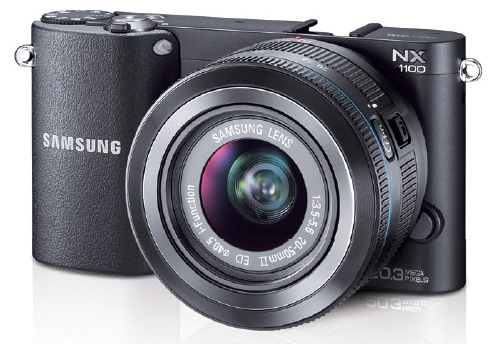
New Samsung NX1100 Digital Camera

New Samsung NX1100 Digital Camera

According to the manual, the Samsung NX1100 features a 21.6-megapixel CMOS sensor and a 3-inch TFT LCD display with VGA resolution. Focus is comprised of contrast auto focus, as well as single point/free selection focus, 15 to 35 point multi-point focus, and face detection that can spot up to ten faces. There’s also a green auto focus lamp to help ensure images are crisp.

ISO has a nice range from 100 to 12,800, and there are the standard modes: Single, Continuous, Burst (limited to 5-megapixel shots), Timer, and Bracket. Images can be taken in JPEG and RAW format. Burst mode ranges from 10 to 30 shots per second, depending on setting. There are 10 white balance modes, including Tungsten, Cloudy, Fluorescent, and Custom, as well as micro adjustments Amber, Blue, Green, and Magenta.
Full Article>

Nikon Unveils Coolpix A, Coolpix P330, Coolpix S3500 Digital Cameras

Shane McGlaun (Blog) – March 5, 2013 (http://www.dailytech.com)

Nikon has added three new cameras to its line of point-and-shoot digital offerings. The first, and most advanced of these new cameras is the Coolpix A featuring a DX-format CMOS sensor. The camera has a wide-angle 18.5 mm F/2.8 lens which makes it appropriate for a range of shooting scenarios according to Nikon.

The Coolpix A also uses a seven-blade iris diaphragm allowing for natural blur characteristics. The camera has a resolution of 16.2-megapixels, can shoot 14-bit compressed RAW images, and can record full HD resolution digital movies. Nikon promises that the Coolpix S will deliver the kind of image quality typically reserved for D-SLR cameras

Full Article>

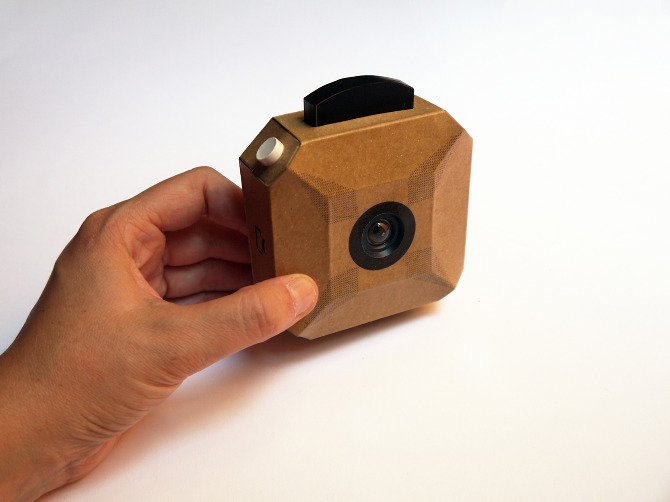
Craft Camera: A DIY Digital Camera Made with Cardboard and Arduino

By: Michael Zhang · Feb 25, 2013 (http://www.petapixel.com)

Craft Camera (http://craft-camera.com)

Craft Camera (DIY)

Enjoy playing around with Arduino and want to try your hand at making your own digital camera? Photographer Coralie Gourguechon has come up with a DIY digital camera called Craft Camera that consists of a simple cardboard body and Arduino guts.

Aside from the Arduino board, you’ll also need a Lithium Backpack (~$47) for the power and a Snootlab Memoire ($25) for the SD card slot:

Full Article>

Link to Official Website

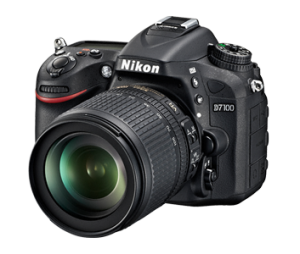
New Nikon D7100 DSLR

The new flagship of Nikon’s DX-format HD-SLR lineup. Achieve a thrilling new level of image quality and sharpness thanks to a specially designed 24.1-MP DX-format CMOS sensor. Enjoy speed, precision and convenience at every step, from shooting up to 6 fps to instantly sharing your shots with the optional WU-1a Wireless Mobile Adapter. Create dazzling Full HD 1080p videos and ultra-smooth slow-motion or time-lapse sequences. Unleash the power of Nikon’s nimble DX-format system.

Nikon D7100 DSLR Camera

Nikon D7100 DSLR Camera

Capture every detail true to life Pure Sharp Images

The D7100 marks an exciting advancement in image quality for high-resolution DX-format cameras. Nikon specially designed its 24.1-megapixel DX-format CMOS sensor without using an optical low pass filter (OLPF), resulting in the purest, sharpest images using D7100’s DX-format CMOS sensor. Combine that with fantastic ISO performance at both ends of the spectrum—down to ISO 100 and up to ISO 6400—the processing speed and intelligence of EXPEED 3 and the extra lens reach of a 1.5x crop factor, and the D7100 is the ultimate tool for those seeking a lightweight DX-format HD-SLR.

Link to Nikon’s Product Page


Samsung smart cameras with built-in Wi-Fi now available

By: Jared Newman Feb 11, 2013 (http://www.techhive.com/)
Samsung’s new batch of Wi-Fi-enabled digital cameras, which the company announced at CES in January, are now on sale through U.S. retailers.
Samsung DV150F Digital Camera

Samsung DV150F Digital Camera

The new Samsung cameras include the $150 DV150F and the $230 WB250F. Both cameras are part of Samsung’s “Smart Camera 2.0” line-up, which allow users to easily offload their photos to a phone or computer, or upload them directly to the Internet. (They’re not to be confused, however, with Samsung’s Galaxy Camera, a 4G-connected device powered by Android.)

The WB250F is a 14.2-megapixel camera with 18x optical zoom, an f/3.2 to f/5.8 aperture lens, and a BSI CMOS sensor. It has a 3-inch LCD display on the backside and a pop-up flash that can be tilted forward and backward.

Full Article>

Panasonic doubles color sensitivity of digital camera sensors

By Jay Alabaster, IDG News Service (http://www.itworld.com)

February 04, 2013, 4:44 AM — Panasonic has developed a new way to drastically increase the color and light sensitivity of digital cameras including those used in smartphones.

The Osaka-based electronics manufacturer said Monday its method replaces the color filter arrays widely used in such devices to capture individual colors, using tiny prism-like color splitters instead. The company said the new method can double the color sensitivity of image sensors, leading to far brighter images under the same lighting conditions or similar image quality at half the light.

Most image sensors on the market detect only the intensity of light they are exposed to, and so must rely on filters to provide color information. Each pixel in a sensor sits under a tiny filter that lets through only a single color. In the widely used Bayer filter, light is filtered into red, blue and green, with green given half the total pixels and the remainder split between the other two colors.

But Panasonic said this filtering method blocks much of the light before it reaches the sensor pixels, letting only 25 to 50 percent through. The company’s “micro color splitters” use a super-thin transparent and refractive material to diffract light into combinations of white, red and blue, with no loss of light, which can then be translated back into standard colors mathematically.

Full Article>

Related Article At PetaPixel.com <Click Here>